-->
American Resources Policy Network
Promoting the development of American mineral resources.
  • “A case study in critical metals inaction” – ARPN’s McGroarty on Rhenium

    In a new piece for Investor Intel, our very own Dan McGroarty sounds the alarm on a little-noticed but troubling passage in the U.S. House-passed Defense Authorization Act for 2014.  Said section in Title III acknowledges the importance of Tungsten and Molybdenum powders, including Tungsten Rhenium (WRe) wire to a variety of Department of Defense (DoD) applications. Noting that there is no suitable substitute for WRe wire, the bill directs the Secretary of Defense to determine whether there is sufficient supply of WRE wire to meet DoD requirements, and to submit a mitigation plan in case of a negative determination.

    As McGroarty argues, “in the case of Tungsten, the U.S. currently produces more than half of the metal it uses each year. Which makes Rhenium the weak link in the WRe chain.”

    The reason?  In spite of the fact that Rhenium is critical for high-temperature superalloys used in the turbines of the Joint Strike Fighter-35 and other fighter aircraft, there is no Rhenium in the U.S. National Defense Stockpile and the U.S. currently imports 78% of the Rhenium it uses.

    With Rhenium being a byproduct of Copper production, the non-specified military applications could be met if the proposed Resolution Copper mine project in Arizona – expected to increase U.S. Rhenium production by more than 200% – was realized.

    However, that project remains in limbo with a necessary land swap bill having met ferocious (and largely baseless) opposition by mining opponents.

    Concludes McGroarty:

    “U.S. policymakers have a choice to make. They can put in place a strategic resource development policy that would help produce more U.S. supply of critical metals like Rhenium – and, while they’re at it, the 18 other metals for which the U.S. is currently 100% import-dependent – or they can stick with our current faith-based resource policy on the theory that other countries will happily sell us the metals and minerals we fail to mine in the U.S.

    Until then, Rhenium will remain an example of the leverage the U.S. places in other country’s hands to provide – or withhold – metals critical to U.S. national security.”

    Click here to read the full piece. 

    Share
  • U.S. Chamber supports strategic metals bill

    United States Congress

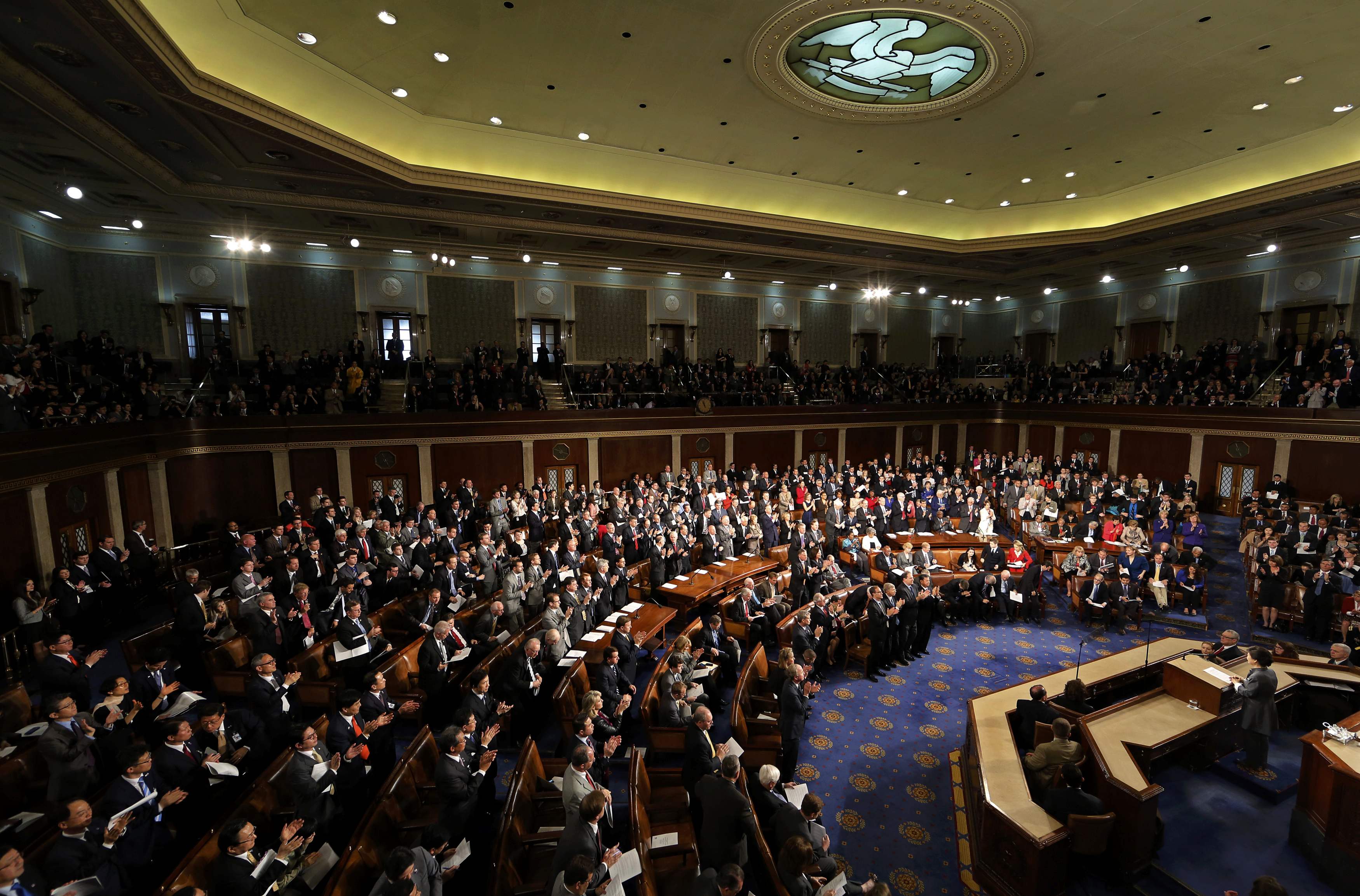
    Bearing testimony to the fact that access to critical mineral supplies is a key issue for our U.S. domestic business and manufacturing base, the U.S. Chamber of Commerce has endorsed Rep. Mark Amodei’s (R, Nev.) “National Strategic and Critical Minerals Production Act of 2013” (H.R. 761)

    Citing the Behre Dolbear report we have frequently invoked in our publications, one of the main points made by the Chamber in its letter of endorsement is the United States’ outdated and rigid permitting process, which the bill sets out to streamline:

    “Of the 25 top mining countries, according to the Behre Dolbear Group’s annual Ranking of Countries for Mining Investment Where “Not to Invest,” the United States is tied with Papua New Guinea for having the most mining permitting delays. As a result, the United States remains a major importer of strategic and critical minerals, despite having vast reserves, and has become increasingly dependent upon foreign sources for these minerals. H.R. 761 would reduce permitting delays while protecting the environment which would in turn increase domestic production of these much needed minerals.”

    Rep. Amodei’s legislation passed the U.S. House of Representatives last year, but was not taken up by the Senate. With 57 co-sponsors having signed onto the legislation, this year’s bill already had more original co-sponsors than the final total number of sponsors of last year’s version, which may indicate favorable odds for its passage. The bill may hit the House floor before the end of this month, so stay tuned for updates.

    Share
  • Foreign mineral dependencies cause “serious gaps in our armor”

    In a recent opinion piece for Politico, Brigadier General John Adams (U.S. Army, ret.) author of “Remaking American Security” and President of Guardian Six Consulting, and Scott Paul, President of the Alliance for American Manufacturing, zero in on the national security implications of our mineral dependencies. Citing Hellfire missiles and night vision goggles as examples, [...]
  • New studies show focus on mineral resource security is finally increasing

    We’ve seen a flurry of new studies focused on mineral resource security over the past few months, an encouraging signal that the issue is increasingly getting the attention it deserves. While we would be remiss not to include our Critical Metals Report and our Gateway Metals Report, two of the more recent studies were released [...]
  • The case for REE independence from China

    In an opinion piece for U.S. News and World Report, Eric Hannis, senior fellow in defense studies at the American Foreign Policy Council, makes the case for U.S. Rare Earths independence from China. With China having flooded the market with cheap Rare Earths in the 1990s, thus pushing U.S. and other foreign competitors out of [...]
  • Legislator Seeks to Streamline Mine Permitting Process

    Amidst a slowly growing awareness of our critical mineral needs and the bureaucratic obstacles to harnessing our domestic mineral potential, U.S. Congressman Mark Amodei (NV-1) has introduced H.R. 4402, the National Strategic and Critical Minerals Production Act of 2012. As per the bill’s official title, it seeks to “require the Secretary of the Interior and [...]
  • British paper finds business more worried about mineral supply crunch than Eurozone crisis

    In this first full trading week of 2012, there is a lot of talk about what the year will bring for investors, manufacturers and consumers, with much of it revolving around the U.S. Presidential primaries and the Eurozone financial crisis. While the importance of these issues cannot be dismissed, the British daily The Independent reminds [...]
  • Our dangerous metals deficiency: DOE releases its new critical minerals strategy

    The Department of Energy officially released its 2011 Critical Materials Strategy, an update of last December’s inaugural report on metals essential to green-tech applications ranging from wind and solar power to EV batteries and CFL lighting.  Five metals made the critical risk quadrant for both the short-term (today to 2015) and medium-term (2015 to 2025); [...]
  • New British study on critical minerals fuels resource dependency debate

    The British Geological Survey (BGS) recently released its supply risk index for critical minerals, which makes the United Kingdom the latest country to zero in on the issue of resource dependency. The study ranks 52 elements or element groups based on a number of factors that impact supply, including each element’s abundance in the Earth and [...]
  • German industry gears up for global resource competition

    In an effort to secure access to critical metals and minerals, Germany’s national industrial association, the Federation of German Industry (BDI) is exploring the formation of a “globally active profit-oriented raw materials corporation.” As the German monthly Manager Magazin reports, the envisioned procurement trust, which companies like chemicals maker Evonik and auto manufacturer Daimler have [...]

Archives