
-->
American Resources Policy Network
Promoting the development of American mineral resources.
  • The race for Arctic riches – Enter Korea

    The race for Arctic riches is getting more crowded, with another player throwing its hat into the ring via Greenland as point of entry. According to a Reuters news story, a Korean state-owned company has inked an agreement with a Greenland mining firm “to seek opportunities for joint minerals projects, exploiting deposits of rare earths and other strategic metals” – a deal that “reflects growing Asian interest in the minerals of the North Atlantic island.”

    Greenland has seen interest in its vast mineral resources perk up with recent visits from European Union officials and Chinese officials seeking cooperative agreements with the self-governing province of Denmark.

    As American Resources principal Daniel McGroarty has pointed out:

    For the U.S., our Arctic claims come via Alaska – a.k.a. Seward’s Folly, and perhaps the best $7.2 million ever spent by the U.S. Government. Across a range of metals and minerals, expect Alaska – and by extension, our Arctic claims – to play a key role in resource supply in the 21st century. Forget the folly: let’s make that William Seward, futurist.

    With more and more potential stakeholders showing up in the Arctic, for the U.S. – and particularly when taking into account the benefits mineral exploration is already providing for the State of Alaska – fortifying its position on the Arctic stage and truly harnessing Alaska’s resource potential makes all the more sense.
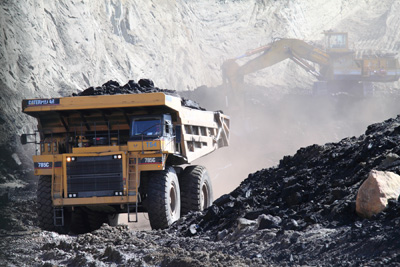
  • America’s Plan du Nord? Mining’s benefits for Alaska

    A profile of Alaska’s mining industry in Petroleum News showcases the benefits the sector provides to the state, including “substantial and growing contributions” to Alaska’s economy and its communities.

    Here are some of the piece’s key points:

    • In 2011, the mining industry accounted for 4,500 direct and 4,500 indirect jobs, most of which were year-round jobs.
    • With total spending of $620 million on direct and indirect payroll, and annual averages of about $100,000, mining registered some of the highest wages in the state.
    • Rents, royalties, fees and taxes filled state coffers to the tune of $148 million (an increase of 170 percent over 2010 revenues), while local governments received $17 million through property taxes and other payments. This is on top of more than $70 million in other payments into state coffers, such as for transportation and construction projects.
    • Mining companies spent more than $300 million on mineral exploration projects in the state in 2011.

     
    The profile also highlights the ripple effects for other Alaska native corporations, and touts the civic impact of the mining industry representing the most significant private-sector presence in many communities.

    The conclusion: while challenges have to be overcome, “further development of Alaska’s mineral resources would bring additional benefits in the form of more high-wage jobs and increased spending with local vendors as well as government and Alaska Native revenue from taxes and royalties. The presence of responsible mining organizations also would dramatically improve the quality of life for many Alaskans who will never see the inside of a mine.”

    While Alaska is already benefiting from its natural resources, the sheer vastness of its mineral wealth alone suggests that much more can be done. A look to the Canada may be in order, where the Canadian province of Quebec is pursuing its ambitious Plan du Nord. As American Resources principal Daniel McGroarty points out in his latest column for Real Clear World, the idea behind the comprehensive plan which encompasses the allocation of $80 billion to resource exploration, is to develop the province’s mineral riches in “strategic bid to contribute to the wealth and prominence of the province.”

    Given its vast mineral potential, Alaska may well be America’s Plan du Nord. The question is, are we ready to implement it?

  • Germany raises Rare Earths issue with China as part of comprehensive resource strategy

    While the EU, Japan and the United States have challenged China’s restrictive Rare Earths export policies before the World Trade Organization (WTO), German Chancellor Angela Merkel appears to have chosen a less confrontational route for Germany’s bilateral relationship with China. During her state visit to China, Merkel offered to partner with Beijing in efforts to (…) more

  • Race for Seabed’s Mineral Riches Heats Up

    The global race for resources is heating up, with the latest frontier being the seabed beneath the world’s oceans. Last year’s discovery of significant Rare Earth deposits by Japanese researchers on the seabed of the Pacific Ocean seems to have set of a flurry of activity on the part of countries trying to gain access (…) more

  • The race is on for North American Rare Earths

    While most Rare Earths-related stories focus on China these days, there’s no denying that the race for critical mineral resources has arrived on the North American continent. As the Fairbanks Daily News Miner reports, Alaska State geologists are excited by the findings of recent mineral cataloguing efforts, with a new $3 million program underway. The (…) more

  • REEs, National Security and Gateway Metals

    A REE World Report titled ‘Political Squeeze Play and the Rare Earth Revolution’ on Rare Metal Blog highlights the implications of U.S. dependency on foreign supplies of Rare Earths for our military. Here are some of the report’s key points: • The current WTO case brought on against China by the U.S., European Union and (…) more

  • China Tinkers With Rare Earth Policy While U.S. Delays Critical Mining Projects

    China has announced a series of moves designed to place additional controls on global rare earth metal supply. Meanwhile, U.S. Federal and state policymakers continue to dither over domestic mining policy initiatives. According to the National Mining Association, the US has $6.2 trillion dollars of mineral reserves, but it also has one of the slowest (…) more

  • American Resources expert discusses defense implications of rare earth shortages in new policy brief

    Earlier this year, a Department of Defense analysis stunned many with its conclusion that concerns about Rare Earths supply shortages were exaggerated. Jeffery A. Green, founder of the Strategic Material Advisory Council and American Resources expert, explains how the Pentagon misses the mark in its assessment in a new policy brief for the Center for (…) more

  • EPA overregulation could cost U.S. $220 billion in investment

    The Daily Caller reports that the EPA’s preemptive assessment of the Pebble copper and gold mine in Alaska could cost the U.S. $220 billion in investment. The agency’s report, based on an evaluation of a hypothetical mine, expresses concern over the site’s potential environmental impact and could lead to Pebble’s rejection before it has a (…) more

  • European wind farms fuel copper demand

    Underscoring once more that technological progress continues to change the utility of metals and minerals, and that today’s mainstay metals may be tomorrow’s specialty metals, European wind farms are driving up copper demand. According to a Reuters story, research consultant Wood Mackenzie expects “copper use in wind turbines to rise 15 percent between 2013 and (…) more

Archives