
-->
American Resources Policy Network
Promoting the development of American mineral resources.
  • China Opens Rare Earth Trading Platform

    News of China opening its first rare earths spot trading platform has reached us via IndustrialMinerals (IndMin), the London-based publishing and research house focusing on non-metallic minerals pricing and business information, and intellectual home for Simon Moores, the latest addition to the American Resources expert panel.

    Here’s how IndMin’s Laura Syrett breaks down the news about the new “Baotou Rare Earth Product Exchange Co. Ltd” in her article:

    • Led by Baotou Steel Rare Earth Hi-Tech, the trading platform, the stated goal of which is to trade REEs “in a way that will regulate prices and ensure greater market transparency,” will involve some of the key players in China’s Rare Earths production, among them Xiamen Tungsten, Sichuan Jiantong Rare Earth Co. Ltd and Inner Mongolia Hi-Tech Holding Co. Ltd.

    • Syrett quotes American Resources principal Daniel McGroarty, who argues the mechanism will have little effect on market transparency, and feels that China’s recent announcement to effectively take 20 percent of its Rare Earth capacity off the market will be far more significant for the industry.

    • Carole Ferguson with UK investment bank Fairfax IS Plc disagrees in an interview with the BBC, and, while not expecting “minute-by-minute pricing”, presumes that the platform will be a “transparent, formal marketplace.”

    However, whether or not the platform will provide a window into the wheelings and dealings of China’s Industry, analysts agree that ultimately, China’s move is once again is about control – which is all the more reason for the U.S. to step up efforts to reduce our (unnecessary) foreign mineral dependencies.
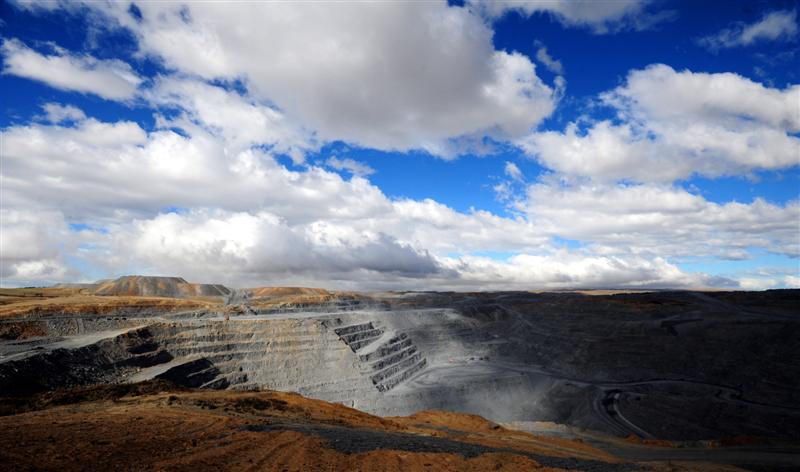
  • New Zealand Government Seeks to Accelerate Mining Permits

    While the U.S. Government continues to talk about critical minerals access and the dangers of foreign dependency, New Zealand’s government is taking action.

    According to MiningNe.ws, the New Zealand government is “looking at ways of speeding up approvals for big mining projects because endless court action is “frustrating” companies and costing them millions.”

    Here are the key points from the MiningNe.ws piece:

    · Aside from looking into new legislation allowing for the acceleration of granting resource consents for “regionally significant” projects, the Ministry for the Environment seeks to limit ways by which appeals can be mounted against such consents.

    · The current legal framework allows for repeated appeals against approval for projects, and has been a source of frustration for the oil and gas industry, property developers, or groups wanting to build wind farms.

    · Energy and Resources Minister Phil Heatley argues that New Zealand has “a court system where people can continue to oppose, and what we’re saying is, maybe we need to bring in a consenting system where … you have a first chance, last chance in court, it’s only appealable on point of law, and then the answer is either yes or no, and you can get on with it.”

    · A sought-after change would emulate the “national consenting process,” which, while allowing for public hearings, provides for fast-tracking of projects with strict time limits.

    Meanwhile, on this side of the Pacific Ocean, the U.S. Environmental Protection Agency is engaging in efforts to not only prolong, but derail mining projects even before any permit requests have been filed.

    For a country that already has the dubious honor of having the lengthiest permitting process among mining nations according to the renowned Behre-Dolbear “Where Not to Invest” ranking, this is an approach that will have a “chilling effect on domestic resource
 development, which will impact our national security, manufacturing
 competiveness, and ability to innovate,” as American Resources principal Daniel McGroarty has pointed out.

  • Chinese-Japanese tensions to rise again over Rare Earths

    China’s suspension of Rare Earth shipments to Japan in the fall of 2010 kicked off a firestorm and has largely contributed to the extensive media coverage Rare Earth supply issues have received in recent months. While shipments were since resumed, reports that Japan is diversifying its supply sources have surfaced from time to time. But (…) more

  • American Resources panel of experts continues to grow

    We’re excited to announce the latest addition to the American Resources panel of issue experts. Simon Moores is manager of the data department at London-based publishing and research house, Industrial Minerals (indmin.com), the world’s leading source for non-metallic minerals pricing and business information. His areas of expertise include global supply and demand issues for strategic (…) more

  • Mining continues to fuel economic growth in Nevada

    Another example of the mining sector’s contribution to economic growth and U.S competitiveness comes to us via our friends at The More You Dig. As the Nevada Review Journal reports, Nevada’s economy, which is slowly rebounding, is expected to add 10,000 to 15,000 workers to its payrolls this year. This news follows on the heels (…) more

  • U.S. Representative: regulatory framework for mining permits hurts job creation, competitiveness

    U.S. Representative Mike Amodei (R, Nev.), sponsor of a bill that seeks to reduce red tape for mining permits and reduce our over-reliance on foreign mineral resources, takes on the rigid U.S. permitting process in a column for the Reno Gazette Journal. Invoking the authoritative Behre Dolbear “Country Rankings for Mining Investment” report, also dubbed (…) more

  • Critical Minerals, national security and EPA overreach

    In a new column featured on the Cleveland Plain Dealer’s website, American Resources principal Daniel McGroarty discusses the latest American Resources report on Critical Minerals & National Security in the context of the U.S. Environmental Protection Agency’s latest manifestations of regulatory overreach. Here are his key points: The EPA’s activist approach to regulating natural resource (…) more

  • Foreign Manufacturers Still Flock to China

    Japanese electronics maker Panasonic has built a new consumer Lithium-ion factory in Suzhou, China. While the plant is located on the premises already owned by Panasonic, the new facility is a manifestation of an ongoing trend of foreign manufacturers moving their production sites into China in order to mitigate reduced access to and increased costs (…) more

  • Two of a kind? Manganese and Rare Earths

    In a new piece on her website, MetalMiner co-founder and American Resources expert Lisa Reisman asks if Manganese is the “Twin Brother or Ugly Stepchild of the Rare Earth Metal Family.” Indeed, there are a number of similarities between both metal markets, which Reisman lists as follows: · Both share significant supply constraints, forcing sourcing (…) more

  • China to accelerate overseas pursuit of nonferrous metals

    As reports about China’s restrictive mineral export policies continue to dominate the resource news cycles, don’t expect Beijing to slow down its aggressive pursuit of access to critical metals and minerals around the world. According to China Daily’s European edition, senior Chinese industry officials have announced that Chinese miners will accelerate the exploration of overseas (…) more

Archives