-->
American Resources Policy Network
Promoting the development of American mineral resources.
  • Made in America Starts with Mined in America

    That’s the title of this Forbes.com piece co-authored by ARPN’s Dan McGroarty and Behre Dolbear CEO Karr McCurdy. ARPN readers know Behre’s “Where Not to Mine” report as the annual review that regularly shows the U.S. leading the mining world in the one category where being first is being last: the time it takes to bring a mine through permitting and into production. In Forbes, McGroarty/McCurdy tie U.S. manufacturing competitiveness to a steady supply of the metals and minerals that provide the energy and raw material inputs for America’s factories.

    So how does the U.S. stack up compared to other mining nations?

    “In this year’s report, the U.S. appears to have improved its overall ranking, but this is only an “optical illusion.” In 2013, other mining countries became less hospitable to mining at a faster pace than the U.S. The fact that Russia, DRC and China’s permitting delays are metastasizing more rapidly than ours is hardly a point of pride.

    “The fact is, it doesn’t have to be this way. The U.S. is remarkably resource-rich, from aluminum to zinc, and many minerals in between. Our substantial mineral endowment provides the U.S. the ability to build a sustainable industry, play a leadership role in the world’s commodity markets, and minimize our growing exposure to the geo-political and economic risks of resource dependency.

    “To a large degree the steady accretion of federal policy got us in this mess; policy reform will lead us out.”

    But there’s a precursor to sound policy. According to McGroarty and McCurdy,

    “…the nation needs a change in mind-set: It’s time to remind ourselves that life as we know it is made possible by the inventive use of metals and minerals. Smart phones, the Cloud, the Internet: These things may seem to work by magic, but quite often the backbone of high-tech is mineral and metal, not fairy dust. Failure to mine what we can here in the U.S. simply perpetuates dangerous dependencies on nations that may not wish us well.

    “Responsible development of domestic mineral resources should be a policy priority. Our ability to grow our economy, revive American industry, and safeguard our national security – depends upon it. Maybe by the time next year’s “Where Not to Invest” report comes along, the U.S. will be seen as having reversed course, putting our economy on a path to a resource-driven recovery.”

    Share
  • Op-ed: How the EPA Sticks Miners With a Motherlode of Regulation

    The following op-ed by American Resources Principal Dan McGroarty was published in the Wall Street Journal on January 3, 2014. The original text can be found here.
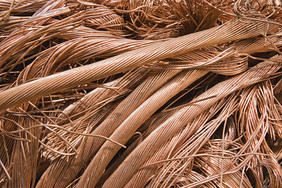
    Copper

    How the EPA Sticks Miners With a Motherlode of Regulation
    The years-long wait for mining permits in the U.S. is the worst in the world.

    On Dec. 13, the proposed Rosemont Copper project in southwestern Arizona—which would produce about one-tenth of all the copper in the U.S. every year—got the green light from the U.S. Forest Service to begin operations.

    It was a long time coming—more than seven years after the company presented its mine plan and began the National Environmental Policy Act review process. Then again, since the average time to get a mine permitted in the U.S. is a worst-in-the-world seven-to-10 years, Rosemont’s long wait isn’t the exception. It’s the rule.

    The Forest Service’s approval should be great news for our high-tech economy, powered by copper in, for instance, electric vehicles, smart homes and smartphones (about 10% of an average phone’s weight is copper). But that decision is overshadowed by the last remaining—and most formidable—governmental hurdle, the Environmental Protection Agency, the guardian of Section 404 of the Clean Water Act. Having run the gauntlet of state and local permitting requirements, Rosemont now faces two potentially fatal challenges from the EPA in the final stages of review: either death by a thousand pesky comments or an outright veto.

    In the bureaucratic equivalent of sticky riot foam—a substance meant to slow and stop people on the street—every few months, a couple of dozen pages furl out from the EPA to Rosemont’s managers. Past communications have included the suggestion that the project might jeopardize the leopard frog, or the Gila topminnow, or the water umbrel. One official worry was that the project might impede the opportunity for people to canoe in a desert region where summer temperatures reach 118 degrees.

    The EPA churns out concerns about potential impacts on 18 miles of streams and threats to the “water quality” of the Davidson Canyon Wash, a single gulch—filled intermittently by rain—in a state with 39,039 rivers and streams. The agency also lets Rosemont know it will be looking at the impacts of mining on air quality—but only after a preliminary process to determine which air-quality standard should apply. Each governmental query receives a Rosemont reply in the never-ending race toward a moving finish line.

    Even this snail’s pace doesn’t satisfy antimining advocates. Many environmentalists and anticapitalists (and many critics are both) would like to see the EPA simply short-circuit the review process and veto the mine proposal. After all, the agency has used Section 404(c) of the Clean Water Act to shut down a mine—famously, the Spruce Mine in West Virginia—even after it had received its operating permit.

    For the most vocal environmental groups, the EPA is perfectly suited as judge and jury. Jennifer Krill, the director of Earthworks, confirmed in congressional testimony earlier this year that her group has never supported or endorsed a single U.S. mine. The threat of an EPA Clean Water Act veto of various projects hangs over more than $220 billion in economic development, ranging from mines to agriculture and infrastructure projects.

    Sadly for communities around the proposed mine—about 30 miles southwest of Tucson in an area where unemployment is still stubbornly close to 10%—every day of delay means a longer wait for much-needed jobs, which would funnel much-needed revenue into local tax coffers. Mothers and fathers struggling to support their families may feel endangered, but unlike the leopard frog, they’re not on a government list.

    The nation, meanwhile, is losing the output of a mine with a projected yearly output of more than 100,000 metric tons. That’s Arizona copper the U.S. wouldn’t need to import from abroad, feeding a negative balance of trade, and providing political and economic leverage to nations that supply the metal we fail to mine ourselves.

    If we mine fewer metals, won’t manufacturing jobs leave the U.S. and go where the metals are? If we don’t mine in the U.S.—with arguably the world’s most stringent oversight, environmental and safety standards—won’t Americans end up importing products made with metals mined in other places under less-stringent standards (if any), leading to far more damage to the environment and the health of the miners? All of these questions are critical to determining whether a mine serves the public good. Surely they must matter to the nation as much as a topminnow does to the EPA.

    Finally, did Congress pass the National Environmental Policy Act to put in place a means of balancing the benefits of resource extraction with competing public goods? Or did it set up an endless bureaucratic gauntlet designed to delay, derail or economically exhaust mine developers?

    Seven and a half years on, Rosemont Copper is still waiting for an answer.

    Share
  • EPA Overreach: Headed for Congressional Push-Back?

    The EPA’s unilateral expansion of its authority appears to be heading for some Congressional push-back. Witness a column written by Alaska’s senior Senator, Lisa Murkowski, for Alaska’s Anchorage Daily News, in which Murkowski asks: “What would Alaskans say if a federal agency retroactively vetoed permits for development of Prudhoe Bay, declaring it never should have [...]
  • Anti-Mine Lobbyists’ Hypocrisy Exposed in the Arizona Copper Debate

    ARPN readers know the vehemence of anti-mining activists in the U.S., including groups like Earthworks, whose director admitted during Congressional testimony earlier this year that the group couldn’t identify a single mine that had ever met with its approval. But the cynical tactics on display in the debate taking place around a U.S. House bill [...]
  • Should we really be speeding up new regulations?

    The following post was originally published here on June 25, 2013 by Ken Cohen, vice president of public and government affairs for Exxon Mobile Corporation. It has been reprinted with permission below. Howard Shelanski, the president’s choice to head the Office of Information and Regulatory Affairs (OIRA), recently testified at his Senate confirmation hearing. He [...]
  • As China shifts towards a “cleaner” energy future, mineral supply questions loom

    As Commodities Now reports, a new Bloomberg New Energy Finance report anticipates that China’s power sector will go through substantial changes through 2030. As part of these expected changes, the country will “add 88 GW of new power plants annually from now until 2030, which is equivalent to building the UK’s total generating capacity every [...]
  • White House solar panel installation fraught with irony

    With August generally being the slower part of the news cycle, one of the bigger stories last week was that the installation of solar panels on the roof of the White House had begun. Administration officials say in retrofitting the White House building to make it more energy efficient, the President is delivering on a [...]
  • EPA’s Bristol Bay Watershed Assessment: A Factual Review of a Hypothetical Scenario

    Testimony presented by Daniel McGroarty – Oversight Hearing of the U.S. House of Representatives Committee on Science, Space & Technology Subcommittee, August 1, 2013 Chairman Broun, Ranking Member Maffei, Members of the Committee: Thank you for the opportunity to testify today. My name is Daniel McGroarty, and I am president of the American Resources Policy [...]
  • Congressional Committee Investigates EPA’s Bristol Bay Watershed Assessment

    ARPN President Testifies on Use of Questionable Research and Calls for Review of Data WASHINGTON, D.C. – Daniel McGroarty, American Resources Policy Network President, provided testimony today on Capitol Hill concerning the EPA’s Bristol Bay Watershed Assessment, a major environmental study in Alaska. “The problem with the Assessment has always been that EPA is preempting [...]
  • Environmentalists push energy efficiency but block development of mineral resources required for clean energy transition

    The issue of the White House blocking several Department of Energy regulations was raised at a recent Congressional hearing, the New York Times reports. The rules in question would require greater energy efficiency for appliances, as well as building and lighting. Critics argue that in spite of a 1993 executive order requiring the White House [...]

Archives
