-->
American Resources Policy Network
Promoting the development of American mineral resources.
  • Public Comment Period on Bristol Bay Watershed Assessment Extended

    Washington Post calls issue “the biggest environmental decision…you’ve never heard of…”

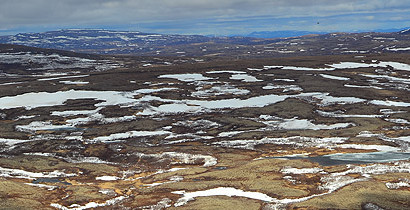
    Iliamna

    The U.S. Environmental Protection Agency has officially extended the public comment period for its draft Bristol Bay Watershed Assessment – a review released in April in response to calls from anti-mining groups for the EPA to issue a preemptive permit veto under section 404(c) of the Clean Water Act of the Pebble mine project in Alaska.

    The Washington Post notes the issue’s importance, which has so far flown largely under the national media’s radar, as potentially “one of the most important environmental decisions the president faces in his second term.”

    The situation does indeed deserve greater attention. The Pebble deposit is quite possibly the largest copper resource in American history, and responsible development of it could create tens of thousands of much-needed jobs and billions in economic development. Far more is at stake, though, as a preemptive permit veto prior to the NEPA (National Environmental Policy Act) process has never been done. As we have previously pointed out, if this precedent is set, every exploratory domestic resource project in the United States will be at risk, jeopardizing our economic and national security future.

    With the comment period extended, please consider weighing in on this important issue and submit a comment to the EPA via their website, if you haven’t done so already.

    For your convenience, here are some key facts and links for further information, as well as a sample message.

    Share
  • Comment on the EPA’s Flawed Watershed Assessment

    Dear Reader,

    We are writing to warn you of a federal action that could dramatically impact America’s domestic supplies of natural resources.

    The U.S. Environmental Protection Agency (EPA) released its revised draft Bristol Bay Watershed Assessment last month in response to calls from anti-mining groups for the EPA to issue a preemptive permit veto under section 404(c) of the Clean Water Act of the Pebble mine outside of the prescribed permitting process.

    A preemptive permit veto prior to the NEPA (National Environmental Policy Act) process has never been done. If this precedent is set, every exploratory domestic resource project in the United States will be at risk.

    To lay the groundwork for the 404(c) denial, the EPA conducted the Bristol Bay Watershed Assessment based on the potential impacts of a hypothetical mine in southwestern Alaska. The study is of a hypothetical mine because the company has not even developed a mine plan yet.

    The public comment period on the revised assessment is open until May 31, 2013. In an effort to ensure a balanced debate – as environmentalists will undoubtedly make ample use of their opportunity to voice their opposition to the project and an expansion of EPA authority via the EPA’s solicitation of public comment – we ask that you consider weighing in on this important issue and submit a comment to the EPA via their website.

    Here are some key facts and links for further information. For your convenience, a sample message is pasted below.
     
    Facts:

    • In May of 2012, the U.S. Environmental Protection Agency, in response to call for a 404C Clean Water Act permit denial, released a cursory review of the Bristol Bay Watershed in Alaska – in spite of the fact that no permit application or specific plans had been submitted.
    • The EPA’s unprecedented early action was part of efforts to derail the development of one of the largest domestic deposits of key strategic mineral resources (Copper, Molybdenum, Gold, Silver and Rhenium) in the so-called Pebble Deposit in Southwestern Alaska.
    • Even scientists serving on the peer-review panel instituted by EPA to validate their study have criticized the purely hypothetical mine scenario used by EPA, and even used the term “hogwash” to characterize the approach.
    • In April 2013, the EPA released its revised draft Bristol Bay Watershed Assessment. Not only does the assessment continue to focus on a hypothetical scenario, it also continues to rely on research paid for by an anti-mining group called Earthworks and conducted by a scientist who recently admitted to developing and submitting a tainted research report to win a $19 billion environmental tort judgment.
    • While the U.S. is the world’s third-largest Copper producer, the related risk exposure to possible supply disruption is disproportionately greater than it is for any other mineral. On the national security front, the Pentagon has already reported a “significant delay” to a major weapons program due to inadequate copper supply.
    • The unilateral expansion of EPA powers under section 404(c) of the Clean Water Act would effectively give the agency ultimate authority to derail any project in the United States that touches on water — with potential impact for projects in every sector of the US economy, from mining to farming, manufacturing, building, energy, and water treatment.

     
    Links

     
    Sample Message:

    Dear Mr. Perciasepe,

    I write to express my concerns regarding the Environmental Protection Agency’s revised draft Bristol Bay Watershed Assessment, which is flawed on several levels.

    Not only does the assessment focus on a purely hypothetical scenario relating to the Pebble deposit, as no official permit requests or plans have been submitted, the assessment continues to rely on research from avowed biased anti mining groups such as Earthworks that have stated there is no large mine in the Unites States or the World that they support.

    The Pebble deposit could be the largest copper resource in American history. Responsible development of it could create tens of thousands of much-needed jobs and billions in economic development.

    At a time when America is struggling to expand its economy and compete with nations like China for raw resources, it is bad public policy that the Environmental Protection Agency would press ahead with a efforts to prevent a mining outside of the prescribed NEPA permitting process, as it would have devastating impacts on America’s natural resource development, exploration, investment, and development.

    Sincerely,

    xxxx
    Share
  • EPA’s revised Bristol Bay Watershed Assessment flawed on several levels

    Pulling a classic Friday afternoon document drop, the Environmental Protection Agency (EPA) released its revised draft Bristol Bay Watershed Assessment on Friday afternoon – only two days after tamping down media expectations that the release was imminent. As American Resources President Daniel McGroarty pointed out in an email to journalists on Friday, the flawed assessment [...]
  • A Response to the EPA’s Release of its Revised Bristol Bay Watershed Assessment

    The EPA just released its revised Bristol Bay Watershed Assessment, outlining the potential impacts of a hypothetical mine in the Pebble region of southwestern Alaska. Unfortunately, the EPA’s study relies on research conducted by the U.S. firm Stratus Consulting and its Managing Scientist, Ann Maest, both of whom just a few short days ago publicly [...]
  • California – Red Tape Central

    California’s nickname, “the Golden State,” can be traced by back to the discovery of the precious metal in the middle of the 19th century. For decades after World War II, it was the proverbial land of milk and honey, a destination for people and businesses in search of opportunity. Fast forward to today, and the [...]
  • Alaska Senate passes resolution in support of REE exploration

    Alaska continues to be a state leader when it comes to formulating mineral resource policy. In line with Gov. Sean Parnell’s five-part strategy to support the mining industry, the State Senate has passed a resolution in support of in-state Rare Earths exploration, which urges state agencies and the federal government to lend its support to [...]
  • Alaska maps state’s “mineral potential from the land and air”

    As the Juneau Empire’s Russell Stigall reports, the State of Alaska’s efforts to map Alaska’s “mineral potential from the land and air” are in full swing. Thanks to the state’s – and particularly Southeast Alaska’s – rich geology, state geologists, including Bob Swenson, state geologist and director of the Alaska Division of Geological and Geophysical [...]
  • Alaska minerals expert joins American Resources panel

    We’re thrilled to announce that Curtis J. Freeman, president of Avalon Development Corporation, has joined the American Resources panel of issue experts. A U.S. Certified Professional Geologist and licensed geologist in the State of Alaska, Mr. Freeman founded Avalon Development Corporation, a mineral exploration consulting firm based in Fairbanks, Alaska in 1985. Mr. Freeman and [...]
  • House Oversight Committee threatens use of subpoena powers in case of the EPA’s Bristol Bay Watershed assessment

    As the Daily Caller reports, the House Committee on Oversight & Government Reform is stepping up the pressure on the U.S. Environmental Protection Agency (EPA) in the context of the agency’s controversial negative review of a potential mining project in Alaska’s Bristol Bay area. Reiterating a request made in May of 2012, when the EPA [...]
  • New Year’s Resolutions for U.S. Policymakers (Part 3)

    This is part three of American Resources’ three-part 2012 retrospective. Check out parts one here and two. Traditionally, the New Year is the time when people reflect on the past twelve months and formulate resolutions for the months ahead. As the first hours of 2013 have been dominated by the drama the Fiscal Cliff, our [...]

Archives